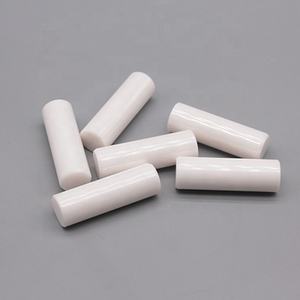
Boron nitride ceramic tubes are now being used as protective sleeves for high-temperature thermistors in demanding industrial applications. These tubes offer strong performance where other materials fail. They handle extreme heat without breaking down. This makes them ideal for in situ temperature sensing in harsh environments.
(Boron Nitride Ceramic Tubes for Sleeves for High Temperature Thermistors for In Situ Temperature Sensing)
The key advantage of boron nitride lies in its thermal stability. It remains stable at temperatures above 1000°C. It also resists thermal shock. This means it can endure rapid heating and cooling cycles without cracking. The material is electrically insulating too. That helps keep sensor signals clean and accurate.
Manufacturers choose these ceramic tubes because they protect sensitive thermistor elements from chemical corrosion and mechanical wear. In processes like metal casting or glass manufacturing, sensors face aggressive conditions. Boron nitride sleeves act as a reliable barrier. They extend the life of the sensing system while maintaining measurement precision.
Installation is straightforward. The tubes fit easily into existing setups. Their smooth surface reduces friction during insertion. This lowers the risk of damaging the thermistor during use. Maintenance needs are minimal. Users report fewer replacements and less downtime.
Demand for accurate real-time temperature data continues to grow across sectors. Aerospace, energy, and advanced manufacturing all rely on dependable sensing solutions. Boron nitride ceramic tubes meet this need with consistent performance under pressure. They support smarter process control and better product quality.
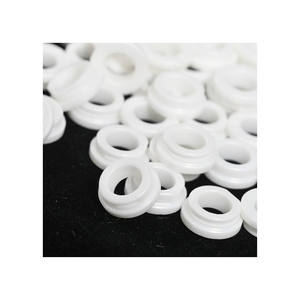
(Boron Nitride Ceramic Tubes for Sleeves for High Temperature Thermistors for In Situ Temperature Sensing)
Suppliers are scaling up production to meet rising orders. New formulations are also in development. These aim to further improve strength and thermal response. Early tests show promising results. Engineers welcome these upgrades as they design next-generation monitoring systems.