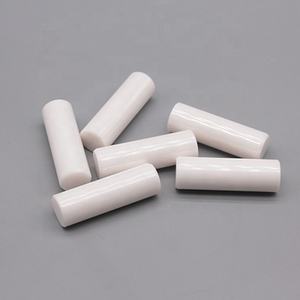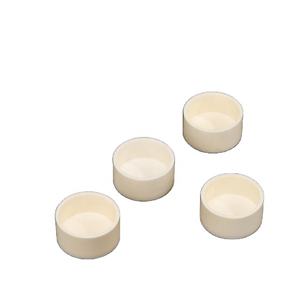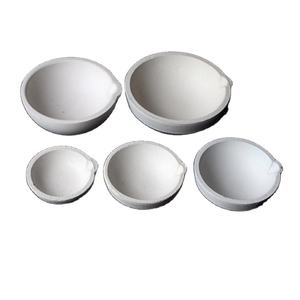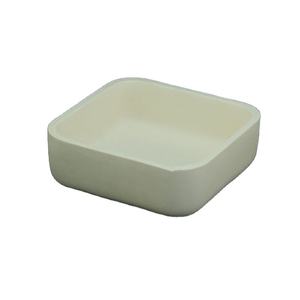
Boron nitride ceramic discs are now proving to be a reliable choice for capacitor dielectrics in high-frequency applications. These components deliver stable electrical performance even when operating under demanding conditions. Engineers and designers in the electronics industry are turning to this material because it maintains consistent properties across a wide range of frequencies.
(Boron Nitride Ceramic Discs for Capacitor Dielectrics Offer Stable Performance at High Frequencies)
The key advantage of boron nitride lies in its low dielectric loss and high thermal conductivity. This means capacitors using these discs can handle heat more efficiently while minimizing signal distortion. As devices continue to operate at higher speeds and frequencies, traditional materials often fall short. Boron nitride offers a practical solution without compromising reliability.
Manufacturers have refined production techniques to ensure uniformity in each disc. This consistency is critical for mass production of precision electronic parts. The material also resists moisture and chemical corrosion, which helps extend the lifespan of components in harsh environments.
Recent tests show that capacitors built with boron nitride ceramic discs perform well from radio frequencies up into the microwave range. This makes them suitable for use in telecommunications, radar systems, and advanced computing hardware. Designers appreciate the predictable behavior of the material, which simplifies circuit tuning and reduces development time.
Availability of these discs has increased as demand grows. Suppliers are scaling up output to meet needs from both commercial and defense sectors. The material’s compatibility with standard manufacturing processes further supports its adoption. Companies no longer need major retooling to integrate boron nitride into existing production lines.
(Boron Nitride Ceramic Discs for Capacitor Dielectrics Offer Stable Performance at High Frequencies)
With performance demands rising across industries, boron nitride ceramic discs provide a solid foundation for next-generation capacitors. Their stability, durability, and ease of use position them as a smart choice for engineers focused on high-frequency design.