1. Product Principles and Microstructural Characteristics
1.1 Structure and Crystallographic Characteristic of Al ₂ O THREE
(Alumina Ceramic Balls, Alumina Ceramic Balls)
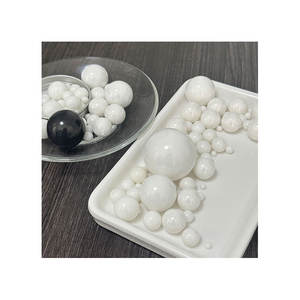
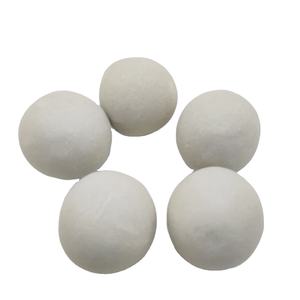
Alumina ceramic balls are round components made from aluminum oxide (Al ₂ O TWO), a completely oxidized, polycrystalline ceramic that shows outstanding solidity, chemical inertness, and thermal security.
The primary crystalline stage in high-performance alumina rounds is α-alumina, which takes on a corundum-type hexagonal close-packed structure where light weight aluminum ions inhabit two-thirds of the octahedral interstices within an oxygen anion latticework, conferring high lattice energy and resistance to phase makeover.
Industrial-grade alumina rounds typically contain 85% to 99.9% Al Two O FOUR, with purity directly influencing mechanical strength, wear resistance, and rust performance.
High-purity grades (≥ 95% Al Two O SIX) are sintered to near-theoretical density (> 99%) using innovative methods such as pressureless sintering or hot isostatic pressing, decreasing porosity and intergranular problems that might serve as tension concentrators.
The resulting microstructure contains penalty, equiaxed grains evenly distributed throughout the quantity, with grain dimensions usually varying from 1 to 5 micrometers, maximized to balance sturdiness and hardness.
1.2 Mechanical and Physical Home Profile
Alumina ceramic spheres are renowned for their extreme solidity– measured at around 1800– 2000 HV on the Vickers scale– exceeding most steels and matching tungsten carbide, making them ideal for wear-intensive settings.
Their high compressive strength (up to 2500 MPa) makes certain dimensional stability under tons, while low elastic contortion improves accuracy in rolling and grinding applications.
Regardless of their brittleness about metals, alumina balls exhibit superb crack strength for porcelains, especially when grain growth is regulated during sintering.
They maintain structural honesty across a large temperature array, from cryogenic problems approximately 1600 ° C in oxidizing ambiences, much exceeding the thermal limitations of polymer or steel equivalents.
In addition, their reduced thermal development coefficient (~ 8 × 10 ⁻⁶/ K) reduces thermal shock vulnerability, enabling usage in swiftly fluctuating thermal atmospheres such as kilns and warmth exchangers.
2. Production Processes and Quality Assurance
()
2.1 Shaping and Sintering Techniques
The manufacturing of alumina ceramic spheres begins with high-purity alumina powder, usually originated from calcined bauxite or chemically precipitated hydrates, which is milled to attain submicron fragment size and slim size circulation.
Powders are after that formed right into round environment-friendly bodies utilizing approaches such as extrusion-spheronization, spray drying, or ball creating in revolving frying pans, relying on the wanted size and batch range.
After shaping, green spheres undergo a binder exhaustion phase complied with by high-temperature sintering, usually in between 1500 ° C and 1700 ° C, where diffusion devices drive densification and grain coarsening.
Exact control of sintering environment (air or regulated oxygen partial pressure), heating price, and dwell time is crucial to accomplishing consistent shrinking, round geometry, and marginal interior issues.
For ultra-high-performance applications, post-sintering treatments such as hot isostatic pressing (HIP) may be related to remove recurring microporosity and better enhance mechanical reliability.
2.2 Precision Finishing and Metrological Confirmation
Complying with sintering, alumina spheres are ground and polished making use of diamond-impregnated media to achieve limited dimensional tolerances and surface coatings equivalent to bearing-grade steel spheres.
Surface area roughness is normally reduced to much less than 0.05 μm Ra, decreasing friction and use in vibrant call situations.
Crucial quality parameters consist of sphericity (deviation from excellent satiation), size variation, surface area honesty, and thickness uniformity, every one of which are gauged utilizing optical interferometry, coordinate measuring machines (CMM), and laser profilometry.
International criteria such as ISO 3290 and ANSI/ABMA define tolerance grades for ceramic rounds utilized in bearings, ensuring interchangeability and efficiency uniformity throughout manufacturers.
Non-destructive screening approaches like ultrasonic examination or X-ray microtomography are utilized to find inner splits, gaps, or incorporations that can jeopardize long-lasting reliability.
3. Practical Advantages Over Metallic and Polymer Counterparts
3.1 Chemical and Rust Resistance in Harsh Environments
Among the most considerable advantages of alumina ceramic balls is their superior resistance to chemical strike.
They continue to be inert in the presence of strong acids (other than hydrofluoric acid), alkalis, natural solvents, and saline solutions, making them suitable for use in chemical processing, pharmaceutical manufacturing, and marine applications where steel elements would corrode rapidly.
This inertness protects against contamination of sensitive media, an essential factor in food processing, semiconductor manufacture, and biomedical tools.
Unlike steel spheres, alumina does not produce corrosion or metal ions, making sure procedure pureness and reducing maintenance frequency.
Their non-magnetic nature even more expands applicability to MRI-compatible gadgets and digital assembly lines where magnetic interference have to be prevented.
3.2 Put On Resistance and Long Service Life
In abrasive or high-cycle atmospheres, alumina ceramic rounds display wear prices orders of size lower than steel or polymer alternatives.
This remarkable resilience translates right into extensive solution intervals, lowered downtime, and lower total expense of ownership despite greater first purchase costs.
They are commonly used as grinding media in sphere mills for pigment dispersion, mineral handling, and nanomaterial synthesis, where their inertness stops contamination and their firmness ensures efficient fragment size reduction.
In mechanical seals and valve components, alumina spheres keep limited resistances over countless cycles, withstanding disintegration from particulate-laden fluids.
4. Industrial and Emerging Applications
4.1 Bearings, Valves, and Fluid Handling Equipments
Alumina ceramic rounds are essential to hybrid sphere bearings, where they are paired with steel or silicon nitride races to incorporate the reduced thickness and deterioration resistance of ceramics with the toughness of metals.
Their low density (~ 3.9 g/cm TWO, concerning 40% lighter than steel) minimizes centrifugal filling at high rotational rates, enabling quicker procedure with reduced warmth generation and boosted energy effectiveness.
Such bearings are utilized in high-speed spindles, dental handpieces, and aerospace systems where reliability under severe conditions is paramount.
In fluid control applications, alumina spheres serve as check shutoff aspects in pumps and metering tools, specifically for hostile chemicals, high-purity water, or ultra-high vacuum cleaner systems.
Their smooth surface and dimensional stability guarantee repeatable securing performance and resistance to galling or seizing.
4.2 Biomedical, Power, and Advanced Modern Technology Makes Use Of
Beyond conventional commercial duties, alumina ceramic rounds are discovering usage in biomedical implants and analysis equipment due to their biocompatibility and radiolucency.
They are employed in fabricated joints and dental prosthetics where wear debris should be reduced to stop inflammatory responses.
In energy systems, they function as inert tracers in tank characterization or as heat-stable parts in concentrated solar energy and gas cell settings up.
Study is additionally exploring functionalized alumina balls for catalytic assistance, sensing unit elements, and accuracy calibration criteria in assessment.
In recap, alumina ceramic rounds exemplify exactly how advanced porcelains link the gap between architectural toughness and functional precision.
Their one-of-a-kind mix of hardness, chemical inertness, thermal stability, and dimensional accuracy makes them essential popular design systems throughout varied markets.
As manufacturing techniques continue to improve, their efficiency and application extent are anticipated to broaden further right into next-generation technologies.
5. Provider
Advanced Ceramics founded on October 17, 2012, is a high-tech enterprise committed to the research and development, production, processing, sales and technical services of ceramic relative materials such as Alumina Ceramic Balls. Our products includes but not limited to Boron Carbide Ceramic Products, Boron Nitride Ceramic Products, Silicon Carbide Ceramic Products, Silicon Nitride Ceramic Products, Zirconium Dioxide Ceramic Products, etc. If you are interested, please feel free to contact us.(nanotrun@yahoo.com)
Tags: alumina balls,alumina balls,alumina ceramic balls
All articles and pictures are from the Internet. If there are any copyright issues, please contact us in time to delete.
Inquiry us