1. Product Structure and Architectural Design
1.1 Glass Chemistry and Round Style
(Hollow glass microspheres)
Hollow glass microspheres (HGMs) are microscopic, spherical fragments made up of alkali borosilicate or soda-lime glass, usually ranging from 10 to 300 micrometers in size, with wall surface densities in between 0.5 and 2 micrometers.
Their defining attribute is a closed-cell, hollow inside that presents ultra-low density– frequently below 0.2 g/cm six for uncrushed spheres– while maintaining a smooth, defect-free surface area important for flowability and composite combination.
The glass structure is crafted to balance mechanical toughness, thermal resistance, and chemical resilience; borosilicate-based microspheres use premium thermal shock resistance and lower antacids material, lessening reactivity in cementitious or polymer matrices.
The hollow framework is created via a regulated growth process during manufacturing, where precursor glass particles having an unpredictable blowing representative (such as carbonate or sulfate compounds) are warmed in a heating system.
As the glass softens, inner gas generation creates interior pressure, creating the particle to inflate into an excellent sphere before rapid cooling solidifies the framework.
This accurate control over dimension, wall surface thickness, and sphericity allows foreseeable efficiency in high-stress design environments.
1.2 Thickness, Strength, and Failure Mechanisms
An important efficiency statistics for HGMs is the compressive strength-to-density ratio, which identifies their capacity to survive processing and solution tons without fracturing.
Industrial grades are classified by their isostatic crush toughness, ranging from low-strength balls (~ 3,000 psi) appropriate for layers and low-pressure molding, to high-strength versions exceeding 15,000 psi used in deep-sea buoyancy components and oil well cementing.
Failing typically occurs through flexible buckling as opposed to brittle fracture, an actions governed by thin-shell auto mechanics and influenced by surface area imperfections, wall surface harmony, and inner pressure.
As soon as fractured, the microsphere loses its protecting and light-weight residential properties, stressing the demand for cautious handling and matrix compatibility in composite layout.
In spite of their fragility under factor tons, the round geometry distributes stress uniformly, permitting HGMs to endure substantial hydrostatic stress in applications such as subsea syntactic foams.
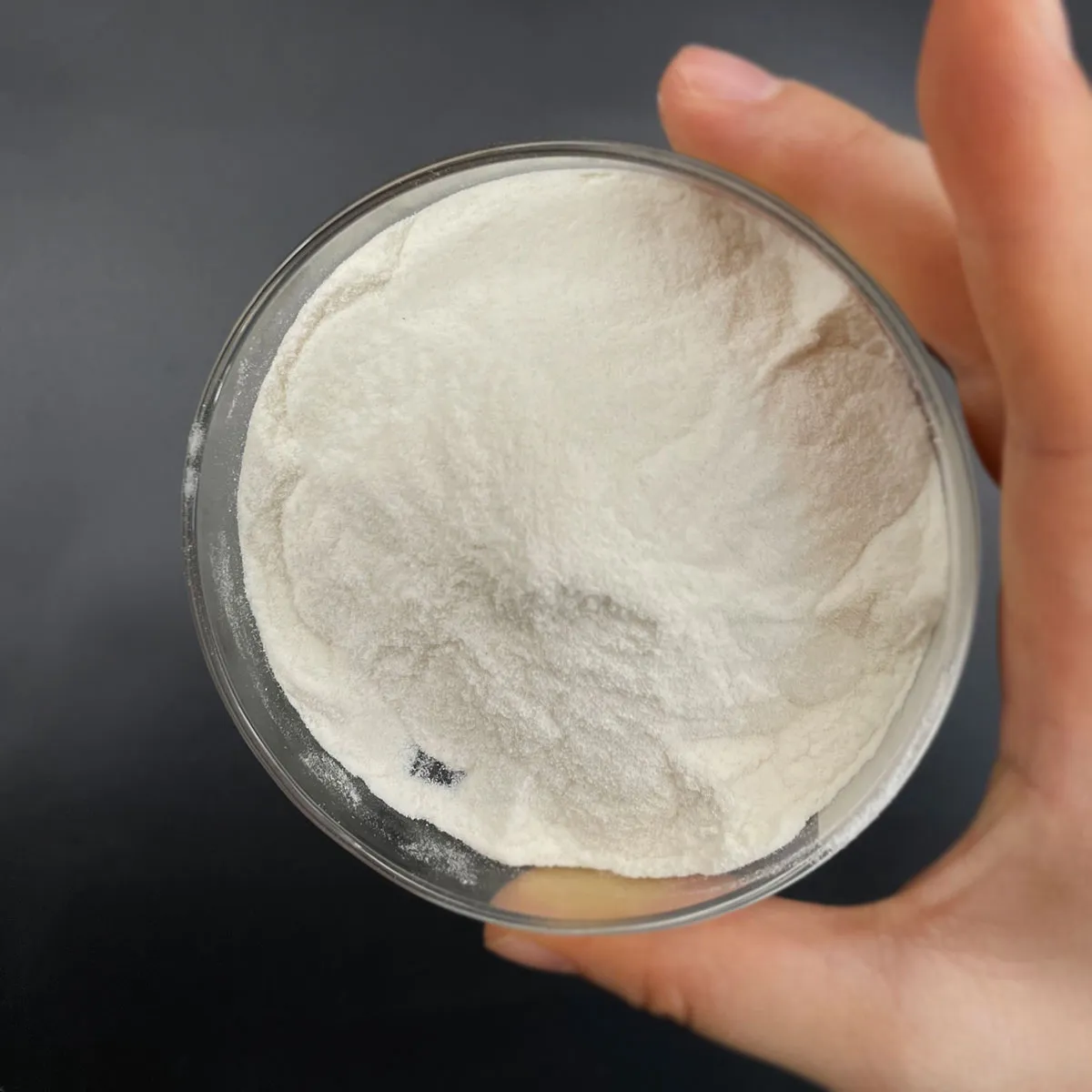
( Hollow glass microspheres)
2. Production and Quality Assurance Processes
2.1 Production Techniques and Scalability
HGMs are produced industrially making use of flame spheroidization or rotating kiln growth, both including high-temperature processing of raw glass powders or preformed grains.
In flame spheroidization, great glass powder is injected right into a high-temperature fire, where surface tension draws liquified beads into spheres while inner gases increase them right into hollow frameworks.
Rotary kiln approaches entail feeding precursor beads into a revolving heating system, making it possible for continuous, large manufacturing with limited control over bit size distribution.
Post-processing actions such as sieving, air classification, and surface treatment guarantee consistent bit dimension and compatibility with target matrices.
Advanced manufacturing now consists of surface functionalization with silane coupling representatives to improve bond to polymer materials, decreasing interfacial slippage and improving composite mechanical homes.
2.2 Characterization and Efficiency Metrics
Quality assurance for HGMs depends on a suite of analytical strategies to confirm crucial parameters.
Laser diffraction and scanning electron microscopy (SEM) examine bit size circulation and morphology, while helium pycnometry determines true fragment density.
Crush toughness is examined making use of hydrostatic pressure examinations or single-particle compression in nanoindentation systems.
Bulk and tapped density measurements educate dealing with and mixing behavior, crucial for commercial formulation.
Thermogravimetric evaluation (TGA) and differential scanning calorimetry (DSC) evaluate thermal stability, with many HGMs remaining secure approximately 600– 800 ° C, depending upon composition.
These standard examinations guarantee batch-to-batch consistency and allow reliable efficiency prediction in end-use applications.
3. Useful Properties and Multiscale Effects
3.1 Density Decrease and Rheological Habits
The key function of HGMs is to minimize the density of composite products without considerably endangering mechanical honesty.
By changing strong resin or steel with air-filled balls, formulators attain weight financial savings of 20– 50% in polymer compounds, adhesives, and cement systems.
This lightweighting is vital in aerospace, marine, and automobile markets, where decreased mass translates to enhanced gas effectiveness and payload capacity.
In fluid systems, HGMs influence rheology; their spherical form minimizes thickness compared to irregular fillers, enhancing circulation and moldability, however high loadings can boost thixotropy due to bit communications.
Proper dispersion is important to prevent heap and make certain consistent properties throughout the matrix.
3.2 Thermal and Acoustic Insulation Properties
The entrapped air within HGMs provides outstanding thermal insulation, with reliable thermal conductivity worths as low as 0.04– 0.08 W/(m · K), relying on quantity portion and matrix conductivity.
This makes them important in shielding coatings, syntactic foams for subsea pipelines, and fireproof structure products.
The closed-cell framework likewise hinders convective warmth transfer, boosting efficiency over open-cell foams.
Likewise, the impedance inequality between glass and air scatters acoustic waves, supplying moderate acoustic damping in noise-control applications such as engine units and aquatic hulls.
While not as reliable as committed acoustic foams, their dual function as lightweight fillers and secondary dampers includes functional worth.
4. Industrial and Arising Applications
4.1 Deep-Sea Engineering and Oil & Gas Equipments
Among one of the most demanding applications of HGMs is in syntactic foams for deep-ocean buoyancy components, where they are embedded in epoxy or vinyl ester matrices to produce compounds that withstand extreme hydrostatic pressure.
These materials preserve positive buoyancy at depths going beyond 6,000 meters, enabling autonomous undersea vehicles (AUVs), subsea sensors, and offshore drilling equipment to run without hefty flotation tanks.
In oil well sealing, HGMs are added to seal slurries to reduce density and avoid fracturing of weak formations, while also enhancing thermal insulation in high-temperature wells.
Their chemical inertness makes certain long-lasting stability in saline and acidic downhole atmospheres.
4.2 Aerospace, Automotive, and Lasting Technologies
In aerospace, HGMs are utilized in radar domes, indoor panels, and satellite parts to reduce weight without compromising dimensional stability.
Automotive manufacturers incorporate them right into body panels, underbody coverings, and battery units for electric lorries to improve power efficiency and lower exhausts.
Arising uses consist of 3D printing of lightweight structures, where HGM-filled resins make it possible for complicated, low-mass elements for drones and robotics.
In sustainable building and construction, HGMs enhance the insulating buildings of lightweight concrete and plasters, contributing to energy-efficient structures.
Recycled HGMs from industrial waste streams are also being discovered to improve the sustainability of composite products.
Hollow glass microspheres exhibit the power of microstructural design to transform bulk product buildings.
By combining reduced density, thermal security, and processability, they make it possible for advancements across marine, energy, transport, and ecological industries.
As product scientific research advancements, HGMs will remain to play a crucial role in the advancement of high-performance, light-weight materials for future innovations.
5. Provider
TRUNNANO is a supplier of Hollow Glass Microspheres with over 12 years of experience in nano-building energy conservation and nanotechnology development. It accepts payment via Credit Card, T/T, West Union and Paypal. Trunnano will ship the goods to customers overseas through FedEx, DHL, by air, or by sea. If you want to know more about Hollow Glass Microspheres, please feel free to contact us and send an inquiry.
Tags:Hollow Glass Microspheres, hollow glass spheres, Hollow Glass Beads
All articles and pictures are from the Internet. If there are any copyright issues, please contact us in time to delete.
Inquiry us