1. Fundamental Chemistry and Structural Quality of Chromium(III) Oxide
1.1 Crystallographic Framework and Electronic Configuration
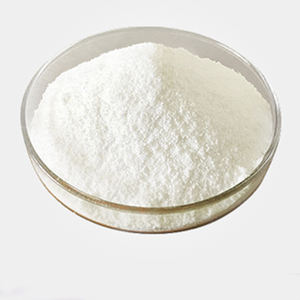
(Chromium Oxide)
Chromium(III) oxide, chemically denoted as Cr two O FOUR, is a thermodynamically secure inorganic compound that comes from the household of shift metal oxides exhibiting both ionic and covalent features.
It crystallizes in the diamond structure, a rhombohedral lattice (space team R-3c), where each chromium ion is octahedrally coordinated by 6 oxygen atoms, and each oxygen is surrounded by 4 chromium atoms in a close-packed arrangement.
This architectural motif, shown to α-Fe two O ₃ (hematite) and Al Two O TWO (diamond), gives phenomenal mechanical solidity, thermal security, and chemical resistance to Cr ₂ O ₃.
The digital arrangement of Cr FIVE ⁺ is [Ar] 3d THREE, and in the octahedral crystal area of the oxide lattice, the three d-electrons inhabit the lower-energy t ₂ g orbitals, causing a high-spin state with considerable exchange communications.
These communications trigger antiferromagnetic purchasing below the Néel temperature of roughly 307 K, although weak ferromagnetism can be observed due to rotate canting in particular nanostructured kinds.
The wide bandgap of Cr ₂ O FOUR– ranging from 3.0 to 3.5 eV– renders it an electrical insulator with high resistivity, making it transparent to visible light in thin-film type while showing up dark eco-friendly wholesale because of strong absorption in the red and blue regions of the spectrum.
1.2 Thermodynamic Stability and Surface Area Sensitivity
Cr ₂ O five is one of one of the most chemically inert oxides known, displaying exceptional resistance to acids, antacid, and high-temperature oxidation.
This stability develops from the strong Cr– O bonds and the reduced solubility of the oxide in liquid atmospheres, which likewise adds to its environmental perseverance and reduced bioavailability.
Nonetheless, under severe problems– such as focused hot sulfuric or hydrofluoric acid– Cr two O five can gradually liquify, creating chromium salts.
The surface area of Cr two O two is amphoteric, with the ability of interacting with both acidic and fundamental varieties, which enables its use as a catalyst assistance or in ion-exchange applications.
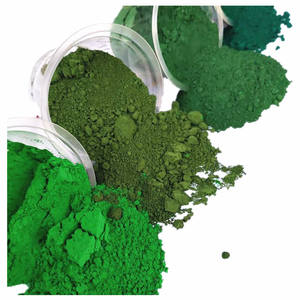
( Chromium Oxide)
Surface hydroxyl groups (– OH) can form with hydration, influencing its adsorption behavior towards metal ions, natural particles, and gases.
In nanocrystalline or thin-film forms, the raised surface-to-volume proportion enhances surface area reactivity, permitting functionalization or doping to tailor its catalytic or electronic homes.
2. Synthesis and Handling Methods for Practical Applications
2.1 Conventional and Advanced Manufacture Routes
The production of Cr two O two covers a variety of methods, from industrial-scale calcination to precision thin-film deposition.
One of the most common industrial path involves the thermal disintegration of ammonium dichromate ((NH FOUR)Two Cr Two O ₇) or chromium trioxide (CrO FOUR) at temperature levels over 300 ° C, generating high-purity Cr ₂ O three powder with regulated particle dimension.
Conversely, the decrease of chromite ores (FeCr ₂ O ₄) in alkaline oxidative environments generates metallurgical-grade Cr two O four used in refractories and pigments.
For high-performance applications, progressed synthesis techniques such as sol-gel processing, combustion synthesis, and hydrothermal methods allow great control over morphology, crystallinity, and porosity.
These techniques are specifically beneficial for generating nanostructured Cr two O three with enhanced surface for catalysis or sensor applications.
2.2 Thin-Film Deposition and Epitaxial Development
In electronic and optoelectronic contexts, Cr two O three is frequently deposited as a slim film using physical vapor deposition (PVD) strategies such as sputtering or electron-beam evaporation.
Chemical vapor deposition (CVD) and atomic layer deposition (ALD) offer remarkable conformality and density control, vital for incorporating Cr ₂ O two into microelectronic tools.
Epitaxial growth of Cr two O two on lattice-matched substratums like α-Al two O four or MgO enables the development of single-crystal movies with marginal flaws, making it possible for the research of intrinsic magnetic and electronic properties.
These premium films are essential for emerging applications in spintronics and memristive gadgets, where interfacial top quality directly influences gadget performance.
3. Industrial and Environmental Applications of Chromium Oxide
3.1 Role as a Resilient Pigment and Unpleasant Product
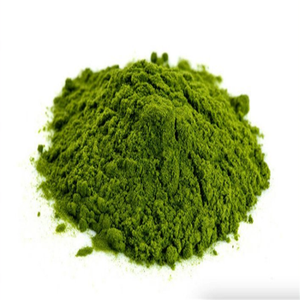
Among the earliest and most prevalent uses of Cr ₂ O Six is as an eco-friendly pigment, traditionally referred to as “chrome eco-friendly” or “viridian” in creative and industrial coatings.
Its extreme shade, UV security, and resistance to fading make it excellent for building paints, ceramic glazes, colored concretes, and polymer colorants.
Unlike some organic pigments, Cr two O six does not break down under extended sunlight or heats, making certain lasting visual longevity.
In rough applications, Cr ₂ O ₃ is utilized in brightening compounds for glass, steels, and optical parts due to its hardness (Mohs solidity of ~ 8– 8.5) and fine fragment size.
It is specifically efficient in accuracy lapping and ending up procedures where minimal surface damage is needed.
3.2 Usage in Refractories and High-Temperature Coatings
Cr ₂ O three is a crucial element in refractory materials used in steelmaking, glass manufacturing, and cement kilns, where it provides resistance to thaw slags, thermal shock, and corrosive gases.
Its high melting factor (~ 2435 ° C) and chemical inertness enable it to maintain architectural honesty in severe settings.
When integrated with Al ₂ O six to form chromia-alumina refractories, the product exhibits boosted mechanical stamina and corrosion resistance.
Furthermore, plasma-sprayed Cr two O two finishings are applied to turbine blades, pump seals, and shutoffs to boost wear resistance and prolong life span in hostile commercial setups.
4. Emerging Duties in Catalysis, Spintronics, and Memristive Devices
4.1 Catalytic Activity in Dehydrogenation and Environmental Remediation
Although Cr Two O four is normally taken into consideration chemically inert, it displays catalytic task in details reactions, specifically in alkane dehydrogenation processes.
Industrial dehydrogenation of gas to propylene– a vital step in polypropylene production– commonly employs Cr two O three supported on alumina (Cr/Al two O SIX) as the active driver.
In this context, Cr SIX ⁺ sites promote C– H bond activation, while the oxide matrix maintains the dispersed chromium varieties and prevents over-oxidation.
The stimulant’s performance is highly conscious chromium loading, calcination temperature, and decrease problems, which influence the oxidation state and sychronisation atmosphere of energetic sites.
Beyond petrochemicals, Cr ₂ O FIVE-based products are checked out for photocatalytic destruction of organic contaminants and carbon monoxide oxidation, especially when doped with shift steels or combined with semiconductors to enhance cost splitting up.
4.2 Applications in Spintronics and Resistive Changing Memory
Cr Two O six has actually gained focus in next-generation digital tools due to its one-of-a-kind magnetic and electrical residential or commercial properties.
It is a normal antiferromagnetic insulator with a direct magnetoelectric impact, suggesting its magnetic order can be regulated by an electrical area and vice versa.
This building allows the development of antiferromagnetic spintronic gadgets that are immune to outside electromagnetic fields and run at high speeds with reduced power usage.
Cr Two O ₃-based passage joints and exchange prejudice systems are being investigated for non-volatile memory and logic devices.
Furthermore, Cr two O ₃ shows memristive habits– resistance changing generated by electric fields– making it a prospect for repellent random-access memory (ReRAM).
The changing device is attributed to oxygen vacancy movement and interfacial redox procedures, which modulate the conductivity of the oxide layer.
These performances placement Cr two O five at the center of research study right into beyond-silicon computing designs.
In recap, chromium(III) oxide transcends its standard function as a passive pigment or refractory additive, emerging as a multifunctional product in sophisticated technical domains.
Its mix of structural effectiveness, digital tunability, and interfacial activity allows applications varying from industrial catalysis to quantum-inspired electronic devices.
As synthesis and characterization techniques development, Cr two O six is poised to play a significantly important function in sustainable manufacturing, power conversion, and next-generation infotech.
5. Supplier
TRUNNANO is a supplier of Spherical Tungsten Powder with over 12 years of experience in nano-building energy conservation and nanotechnology development. It accepts payment via Credit Card, T/T, West Union and Paypal. Trunnano will ship the goods to customers overseas through FedEx, DHL, by air, or by sea. If you want to know more about Spherical Tungsten Powder, please feel free to contact us and send an inquiry(sales5@nanotrun.com).
Tags: Chromium Oxide, Cr₂O₃, High-Purity Chromium Oxide
All articles and pictures are from the Internet. If there are any copyright issues, please contact us in time to delete.
Inquiry us