1. The Material Structure and Crystallographic Identification of Alumina Ceramics
1.1 Atomic Design and Phase Stability
(Alumina Ceramics)
Alumina porcelains, mostly composed of aluminum oxide (Al ₂ O THREE), represent one of the most commonly made use of courses of sophisticated ceramics because of their phenomenal equilibrium of mechanical strength, thermal resilience, and chemical inertness.
At the atomic level, the efficiency of alumina is rooted in its crystalline structure, with the thermodynamically secure alpha stage (α-Al ₂ O FIVE) being the leading form made use of in design applications.
This phase adopts a rhombohedral crystal system within the hexagonal close-packed (HCP) lattice, where oxygen anions develop a dense arrangement and aluminum cations inhabit two-thirds of the octahedral interstitial websites.
The resulting framework is extremely secure, adding to alumina’s high melting factor of about 2072 ° C and its resistance to decay under extreme thermal and chemical problems.
While transitional alumina stages such as gamma (γ), delta (δ), and theta (θ) exist at lower temperature levels and show greater area, they are metastable and irreversibly change right into the alpha phase upon home heating above 1100 ° C, making α-Al two O ₃ the special phase for high-performance architectural and functional elements.
1.2 Compositional Grading and Microstructural Design
The homes of alumina ceramics are not fixed however can be tailored through regulated variants in purity, grain dimension, and the addition of sintering help.
High-purity alumina (≥ 99.5% Al ₂ O FOUR) is employed in applications requiring optimum mechanical strength, electric insulation, and resistance to ion diffusion, such as in semiconductor handling and high-voltage insulators.
Lower-purity qualities (ranging from 85% to 99% Al ₂ O SIX) typically integrate secondary stages like mullite (3Al two O FOUR · 2SiO ₂) or lustrous silicates, which boost sinterability and thermal shock resistance at the expenditure of hardness and dielectric efficiency.
A vital factor in efficiency optimization is grain dimension control; fine-grained microstructures, achieved via the addition of magnesium oxide (MgO) as a grain development prevention, considerably boost fracture toughness and flexural stamina by restricting crack propagation.
Porosity, also at low degrees, has a harmful result on mechanical integrity, and totally thick alumina porcelains are typically generated through pressure-assisted sintering strategies such as hot pressing or hot isostatic pushing (HIP).
The interaction in between structure, microstructure, and handling defines the functional envelope within which alumina ceramics run, enabling their usage throughout a large spectrum of commercial and technical domain names.
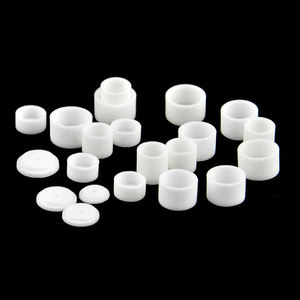
( Alumina Ceramics)
2. Mechanical and Thermal Efficiency in Demanding Environments
2.1 Toughness, Hardness, and Wear Resistance
Alumina porcelains display an one-of-a-kind mix of high firmness and modest fracture durability, making them optimal for applications entailing rough wear, erosion, and effect.
With a Vickers solidity usually ranging from 15 to 20 GPa, alumina ranks among the hardest design materials, gone beyond only by diamond, cubic boron nitride, and specific carbides.
This extreme hardness translates right into outstanding resistance to scratching, grinding, and bit impingement, which is made use of in elements such as sandblasting nozzles, reducing tools, pump seals, and wear-resistant linings.
Flexural toughness values for dense alumina range from 300 to 500 MPa, depending on purity and microstructure, while compressive toughness can go beyond 2 GPa, enabling alumina parts to stand up to high mechanical loads without contortion.
Regardless of its brittleness– an usual trait amongst porcelains– alumina’s efficiency can be maximized with geometric layout, stress-relief functions, and composite support strategies, such as the consolidation of zirconia particles to generate change toughening.
2.2 Thermal Habits and Dimensional Stability
The thermal residential properties of alumina ceramics are main to their usage in high-temperature and thermally cycled settings.
With a thermal conductivity of 20– 30 W/m · K– greater than many polymers and comparable to some metals– alumina effectively dissipates warm, making it suitable for warmth sinks, insulating substratums, and heater components.
Its reduced coefficient of thermal development (~ 8 × 10 ⁻⁶/ K) guarantees very little dimensional adjustment throughout heating & cooling, decreasing the danger of thermal shock fracturing.
This stability is especially valuable in applications such as thermocouple security tubes, spark plug insulators, and semiconductor wafer dealing with systems, where specific dimensional control is crucial.
Alumina keeps its mechanical stability approximately temperatures of 1600– 1700 ° C in air, beyond which creep and grain limit moving may launch, depending on purity and microstructure.
In vacuum cleaner or inert ambiences, its performance expands also further, making it a preferred product for space-based instrumentation and high-energy physics experiments.
3. Electrical and Dielectric Qualities for Advanced Technologies
3.1 Insulation and High-Voltage Applications
Among the most substantial practical features of alumina ceramics is their outstanding electrical insulation ability.
With a volume resistivity exceeding 10 ¹⁴ Ω · cm at area temperature and a dielectric strength of 10– 15 kV/mm, alumina acts as a trusted insulator in high-voltage systems, consisting of power transmission equipment, switchgear, and digital product packaging.
Its dielectric continuous (εᵣ ≈ 9– 10 at 1 MHz) is reasonably stable across a vast regularity range, making it appropriate for usage in capacitors, RF parts, and microwave substratums.
Low dielectric loss (tan δ < 0.0005) guarantees very little energy dissipation in alternating current (AIR CONDITIONER) applications, improving system efficiency and minimizing heat generation.
In published circuit card (PCBs) and hybrid microelectronics, alumina substratums provide mechanical assistance and electrical seclusion for conductive traces, allowing high-density circuit assimilation in harsh environments.
3.2 Performance in Extreme and Delicate Settings
Alumina porcelains are uniquely matched for usage in vacuum, cryogenic, and radiation-intensive settings as a result of their low outgassing prices and resistance to ionizing radiation.
In fragment accelerators and combination reactors, alumina insulators are used to isolate high-voltage electrodes and analysis sensors without introducing contaminants or deteriorating under long term radiation exposure.
Their non-magnetic nature additionally makes them ideal for applications including strong electromagnetic fields, such as magnetic resonance imaging (MRI) systems and superconducting magnets.
Moreover, alumina’s biocompatibility and chemical inertness have resulted in its adoption in medical gadgets, including oral implants and orthopedic components, where lasting stability and non-reactivity are paramount.
4. Industrial, Technological, and Emerging Applications
4.1 Duty in Industrial Machinery and Chemical Processing
Alumina ceramics are thoroughly utilized in commercial equipment where resistance to put on, rust, and heats is essential.
Elements such as pump seals, valve seats, nozzles, and grinding media are commonly produced from alumina as a result of its capability to endure unpleasant slurries, aggressive chemicals, and elevated temperatures.
In chemical processing plants, alumina cellular linings shield reactors and pipes from acid and antacid attack, prolonging tools life and decreasing upkeep expenses.
Its inertness additionally makes it appropriate for usage in semiconductor construction, where contamination control is crucial; alumina chambers and wafer watercrafts are subjected to plasma etching and high-purity gas atmospheres without leaching pollutants.
4.2 Integration into Advanced Production and Future Technologies
Beyond traditional applications, alumina ceramics are playing a significantly vital duty in emerging modern technologies.
In additive production, alumina powders are made use of in binder jetting and stereolithography (SLA) refines to fabricate complicated, high-temperature-resistant elements for aerospace and energy systems.
Nanostructured alumina movies are being discovered for catalytic assistances, sensors, and anti-reflective finishings due to their high surface and tunable surface chemistry.
In addition, alumina-based compounds, such as Al Two O THREE-ZrO ₂ or Al ₂ O SIX-SiC, are being developed to conquer the intrinsic brittleness of monolithic alumina, offering enhanced sturdiness and thermal shock resistance for next-generation structural materials.
As industries continue to push the borders of performance and reliability, alumina porcelains stay at the leading edge of material advancement, connecting the gap between structural effectiveness and functional adaptability.
In recap, alumina ceramics are not merely a class of refractory materials but a keystone of modern design, allowing technical progress throughout power, electronics, healthcare, and commercial automation.
Their distinct mix of residential or commercial properties– rooted in atomic framework and fine-tuned with advanced handling– guarantees their continued importance in both developed and arising applications.
As material science develops, alumina will undoubtedly remain a key enabler of high-performance systems running at the edge of physical and environmental extremes.
5. Distributor
Alumina Technology Co., Ltd focus on the research and development, production and sales of aluminum oxide powder, aluminum oxide products, aluminum oxide crucible, etc., serving the electronics, ceramics, chemical and other industries. Since its establishment in 2005, the company has been committed to providing customers with the best products and services. If you are looking for high quality saint gobain alumina, please feel free to contact us. (nanotrun@yahoo.com)
Tags: Alumina Ceramics, alumina, aluminum oxide
All articles and pictures are from the Internet. If there are any copyright issues, please contact us in time to delete.
Inquiry us