1. Basic Structure and Structural Design of Quartz Ceramics
1.1 Crystalline vs. Fused Silica: Defining the Product Class
(Transparent Ceramics)
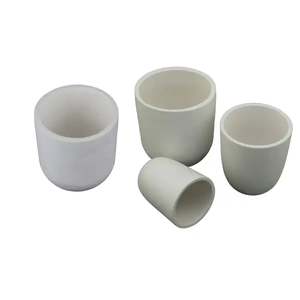
Quartz ceramics, also known as fused quartz or integrated silica porcelains, are sophisticated not natural products originated from high-purity crystalline quartz (SiO TWO) that go through controlled melting and debt consolidation to create a thick, non-crystalline (amorphous) or partly crystalline ceramic structure.
Unlike conventional porcelains such as alumina or zirconia, which are polycrystalline and composed of numerous phases, quartz ceramics are mostly made up of silicon dioxide in a network of tetrahedrally coordinated SiO ₄ systems, providing remarkable chemical purity– usually going beyond 99.9% SiO ₂.
The distinction in between fused quartz and quartz ceramics lies in processing: while fused quartz is normally a completely amorphous glass formed by fast cooling of molten silica, quartz porcelains may entail regulated crystallization (devitrification) or sintering of fine quartz powders to accomplish a fine-grained polycrystalline or glass-ceramic microstructure with improved mechanical toughness.
This hybrid technique incorporates the thermal and chemical stability of integrated silica with improved fracture strength and dimensional security under mechanical lots.
1.2 Thermal and Chemical Stability Devices
The exceptional performance of quartz ceramics in extreme settings comes from the strong covalent Si– O bonds that form a three-dimensional connect with high bond energy (~ 452 kJ/mol), giving exceptional resistance to thermal degradation and chemical strike.
These products exhibit an extremely low coefficient of thermal development– around 0.55 × 10 ⁻⁶/ K over the range 20– 300 ° C– making them extremely resistant to thermal shock, a vital feature in applications involving rapid temperature biking.
They keep architectural honesty from cryogenic temperatures as much as 1200 ° C in air, and also higher in inert atmospheres, before softening starts around 1600 ° C.
Quartz porcelains are inert to most acids, including hydrochloric, nitric, and sulfuric acids, because of the stability of the SiO ₂ network, although they are prone to strike by hydrofluoric acid and strong antacid at raised temperature levels.
This chemical resilience, incorporated with high electrical resistivity and ultraviolet (UV) transparency, makes them perfect for usage in semiconductor processing, high-temperature furnaces, and optical systems revealed to harsh conditions.
2. Production Processes and Microstructural Control
( Transparent Ceramics)
2.1 Melting, Sintering, and Devitrification Pathways
The manufacturing of quartz porcelains involves innovative thermal processing methods designed to preserve pureness while attaining desired density and microstructure.
One usual method is electrical arc melting of high-purity quartz sand, followed by controlled air conditioning to form merged quartz ingots, which can after that be machined right into elements.
For sintered quartz porcelains, submicron quartz powders are compressed by means of isostatic pushing and sintered at temperature levels between 1100 ° C and 1400 ° C, often with marginal ingredients to advertise densification without inducing excessive grain development or stage makeover.
A vital difficulty in handling is staying clear of devitrification– the spontaneous condensation of metastable silica glass into cristobalite or tridymite phases– which can jeopardize thermal shock resistance due to quantity changes throughout phase changes.
Makers utilize specific temperature level control, fast cooling cycles, and dopants such as boron or titanium to reduce undesirable crystallization and maintain a steady amorphous or fine-grained microstructure.
2.2 Additive Production and Near-Net-Shape Fabrication
Recent breakthroughs in ceramic additive production (AM), especially stereolithography (SHANTY TOWN) and binder jetting, have actually enabled the manufacture of complicated quartz ceramic elements with high geometric accuracy.
In these processes, silica nanoparticles are put on hold in a photosensitive resin or selectively bound layer-by-layer, followed by debinding and high-temperature sintering to achieve full densification.
This method minimizes product waste and allows for the production of complex geometries– such as fluidic networks, optical tooth cavities, or warmth exchanger aspects– that are challenging or impossible to attain with traditional machining.
Post-processing strategies, consisting of chemical vapor seepage (CVI) or sol-gel covering, are in some cases put on seal surface area porosity and boost mechanical and ecological toughness.
These innovations are broadening the application extent of quartz ceramics into micro-electromechanical systems (MEMS), lab-on-a-chip gadgets, and tailored high-temperature components.
3. Useful Features and Efficiency in Extreme Environments
3.1 Optical Transparency and Dielectric Actions
Quartz ceramics display one-of-a-kind optical homes, including high transmission in the ultraviolet, visible, and near-infrared spectrum (from ~ 180 nm to 2500 nm), making them essential in UV lithography, laser systems, and space-based optics.
This openness occurs from the lack of electronic bandgap transitions in the UV-visible array and marginal spreading because of homogeneity and reduced porosity.
On top of that, they possess exceptional dielectric residential properties, with a reduced dielectric constant (~ 3.8 at 1 MHz) and minimal dielectric loss, enabling their usage as insulating components in high-frequency and high-power electronic systems, such as radar waveguides and plasma activators.
Their capacity to keep electrical insulation at raised temperature levels even more boosts integrity sought after electric settings.
3.2 Mechanical Habits and Long-Term Durability
Despite their high brittleness– a common trait among porcelains– quartz porcelains demonstrate excellent mechanical stamina (flexural strength approximately 100 MPa) and excellent creep resistance at heats.
Their firmness (around 5.5– 6.5 on the Mohs range) offers resistance to surface abrasion, although treatment should be taken during dealing with to prevent breaking or split propagation from surface problems.
Ecological sturdiness is an additional vital benefit: quartz porcelains do not outgas substantially in vacuum, stand up to radiation damage, and preserve dimensional security over extended exposure to thermal cycling and chemical atmospheres.
This makes them recommended materials in semiconductor construction chambers, aerospace sensors, and nuclear instrumentation where contamination and failing should be decreased.
4. Industrial, Scientific, and Arising Technological Applications
4.1 Semiconductor and Photovoltaic Manufacturing Systems
In the semiconductor sector, quartz porcelains are ubiquitous in wafer processing tools, consisting of heating system tubes, bell jars, susceptors, and shower heads made use of in chemical vapor deposition (CVD) and plasma etching.
Their pureness stops metallic contamination of silicon wafers, while their thermal stability ensures consistent temperature level circulation during high-temperature processing steps.
In solar production, quartz components are used in diffusion heating systems and annealing systems for solar cell production, where consistent thermal profiles and chemical inertness are crucial for high return and efficiency.
The demand for bigger wafers and greater throughput has driven the development of ultra-large quartz ceramic frameworks with boosted homogeneity and decreased problem thickness.
4.2 Aerospace, Protection, and Quantum Technology Assimilation
Beyond commercial processing, quartz porcelains are employed in aerospace applications such as missile support home windows, infrared domes, and re-entry automobile parts due to their capability to withstand extreme thermal slopes and wind resistant stress and anxiety.
In defense systems, their openness to radar and microwave regularities makes them appropriate for radomes and sensor housings.
Much more recently, quartz porcelains have actually discovered duties in quantum innovations, where ultra-low thermal growth and high vacuum compatibility are required for precision optical tooth cavities, atomic catches, and superconducting qubit units.
Their ability to lessen thermal drift makes sure lengthy comprehensibility times and high dimension precision in quantum computing and sensing systems.
In summary, quartz porcelains stand for a class of high-performance materials that connect the gap in between standard ceramics and specialized glasses.
Their exceptional combination of thermal security, chemical inertness, optical openness, and electrical insulation makes it possible for modern technologies operating at the restrictions of temperature, pureness, and accuracy.
As making strategies advance and require expands for products efficient in enduring significantly extreme conditions, quartz porcelains will continue to play a fundamental role beforehand semiconductor, energy, aerospace, and quantum systems.
5. Distributor
Advanced Ceramics founded on October 17, 2012, is a high-tech enterprise committed to the research and development, production, processing, sales and technical services of ceramic relative materials and products. Our products includes but not limited to Boron Carbide Ceramic Products, Boron Nitride Ceramic Products, Silicon Carbide Ceramic Products, Silicon Nitride Ceramic Products, Zirconium Dioxide Ceramic Products, etc. If you are interested, please feel free to contact us.(nanotrun@yahoo.com)
Tags: Transparent Ceramics, ceramic dish, ceramic piping
All articles and pictures are from the Internet. If there are any copyright issues, please contact us in time to delete.
Inquiry us