1. Basic Features and Nanoscale Behavior of Silicon at the Submicron Frontier
1.1 Quantum Arrest and Electronic Structure Makeover
(Nano-Silicon Powder)
Nano-silicon powder, composed of silicon fragments with particular dimensions below 100 nanometers, represents a standard shift from bulk silicon in both physical habits and functional energy.
While mass silicon is an indirect bandgap semiconductor with a bandgap of about 1.12 eV, nano-sizing induces quantum arrest impacts that essentially change its digital and optical properties.
When the particle size approaches or falls listed below the exciton Bohr radius of silicon (~ 5 nm), charge providers come to be spatially constrained, bring about a widening of the bandgap and the emergence of visible photoluminescence– a sensation lacking in macroscopic silicon.
This size-dependent tunability makes it possible for nano-silicon to produce light across the visible range, making it an appealing candidate for silicon-based optoelectronics, where typical silicon stops working because of its inadequate radiative recombination efficiency.
Additionally, the raised surface-to-volume ratio at the nanoscale boosts surface-related sensations, consisting of chemical sensitivity, catalytic activity, and communication with magnetic fields.
These quantum impacts are not simply scholastic inquisitiveness yet create the foundation for next-generation applications in power, picking up, and biomedicine.
1.2 Morphological Diversity and Surface Chemistry
Nano-silicon powder can be manufactured in numerous morphologies, consisting of round nanoparticles, nanowires, permeable nanostructures, and crystalline quantum dots, each offering distinctive advantages depending on the target application.
Crystalline nano-silicon usually retains the diamond cubic framework of mass silicon however shows a greater density of surface defects and dangling bonds, which need to be passivated to maintain the material.
Surface functionalization– often accomplished with oxidation, hydrosilylation, or ligand accessory– plays a vital role in figuring out colloidal stability, dispersibility, and compatibility with matrices in composites or biological atmospheres.
For instance, hydrogen-terminated nano-silicon reveals high reactivity and is susceptible to oxidation in air, whereas alkyl- or polyethylene glycol (PEG)-covered bits display enhanced security and biocompatibility for biomedical usage.
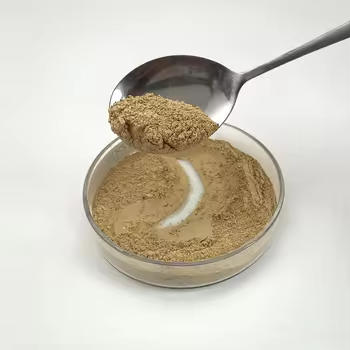
( Nano-Silicon Powder)
The existence of an indigenous oxide layer (SiOₓ) on the bit surface, even in very little amounts, dramatically affects electrical conductivity, lithium-ion diffusion kinetics, and interfacial reactions, particularly in battery applications.
Understanding and controlling surface area chemistry is as a result necessary for utilizing the complete potential of nano-silicon in practical systems.
2. Synthesis Strategies and Scalable Manufacture Techniques
2.1 Top-Down Strategies: Milling, Etching, and Laser Ablation
The manufacturing of nano-silicon powder can be broadly classified into top-down and bottom-up approaches, each with distinct scalability, pureness, and morphological control characteristics.
Top-down strategies include the physical or chemical reduction of mass silicon right into nanoscale fragments.
High-energy ball milling is an extensively used commercial technique, where silicon portions go through extreme mechanical grinding in inert ambiences, causing micron- to nano-sized powders.
While cost-efficient and scalable, this technique typically introduces crystal issues, contamination from grating media, and wide fragment size circulations, requiring post-processing purification.
Magnesiothermic decrease of silica (SiO TWO) complied with by acid leaching is one more scalable route, especially when using all-natural or waste-derived silica sources such as rice husks or diatoms, offering a lasting pathway to nano-silicon.
Laser ablation and responsive plasma etching are more accurate top-down approaches, capable of creating high-purity nano-silicon with regulated crystallinity, though at greater expense and lower throughput.
2.2 Bottom-Up Techniques: Gas-Phase and Solution-Phase Growth
Bottom-up synthesis permits better control over particle dimension, form, and crystallinity by constructing nanostructures atom by atom.
Chemical vapor deposition (CVD) and plasma-enhanced CVD (PECVD) enable the development of nano-silicon from aeriform precursors such as silane (SiH FOUR) or disilane (Si ₂ H ₆), with specifications like temperature, pressure, and gas circulation dictating nucleation and growth kinetics.
These approaches are especially reliable for producing silicon nanocrystals installed in dielectric matrices for optoelectronic devices.
Solution-phase synthesis, consisting of colloidal routes utilizing organosilicon substances, enables the manufacturing of monodisperse silicon quantum dots with tunable discharge wavelengths.
Thermal decay of silane in high-boiling solvents or supercritical liquid synthesis also yields premium nano-silicon with slim dimension circulations, suitable for biomedical labeling and imaging.
While bottom-up approaches usually produce superior material top quality, they deal with obstacles in large manufacturing and cost-efficiency, requiring ongoing research into hybrid and continuous-flow processes.
3. Power Applications: Revolutionizing Lithium-Ion and Beyond-Lithium Batteries
3.1 Function in High-Capacity Anodes for Lithium-Ion Batteries
One of one of the most transformative applications of nano-silicon powder hinges on energy storage space, specifically as an anode material in lithium-ion batteries (LIBs).
Silicon uses an academic specific capacity of ~ 3579 mAh/g based on the formation of Li ₁₅ Si ₄, which is virtually 10 times more than that of standard graphite (372 mAh/g).
However, the large quantity development (~ 300%) during lithiation triggers particle pulverization, loss of electrical call, and continuous solid electrolyte interphase (SEI) formation, resulting in fast ability discolor.
Nanostructuring alleviates these issues by reducing lithium diffusion paths, accommodating pressure more effectively, and minimizing fracture chance.
Nano-silicon in the form of nanoparticles, permeable structures, or yolk-shell frameworks makes it possible for relatively easy to fix biking with enhanced Coulombic efficiency and cycle life.
Commercial battery modern technologies currently incorporate nano-silicon blends (e.g., silicon-carbon compounds) in anodes to enhance energy thickness in customer electronic devices, electric lorries, and grid storage systems.
3.2 Prospective in Sodium-Ion, Potassium-Ion, and Solid-State Batteries
Past lithium-ion systems, nano-silicon is being checked out in emerging battery chemistries.
While silicon is much less responsive with sodium than lithium, nano-sizing enhances kinetics and makes it possible for minimal Na ⁺ insertion, making it a candidate for sodium-ion battery anodes, particularly when alloyed or composited with tin or antimony.
In solid-state batteries, where mechanical security at electrode-electrolyte user interfaces is crucial, nano-silicon’s ability to undertake plastic deformation at small ranges lowers interfacial tension and improves contact upkeep.
Additionally, its compatibility with sulfide- and oxide-based solid electrolytes opens avenues for more secure, higher-energy-density storage solutions.
Research study remains to maximize interface engineering and prelithiation techniques to make best use of the long life and performance of nano-silicon-based electrodes.
4. Emerging Frontiers in Photonics, Biomedicine, and Composite Materials
4.1 Applications in Optoelectronics and Quantum Light Sources
The photoluminescent residential or commercial properties of nano-silicon have actually revitalized efforts to develop silicon-based light-emitting tools, a long-lasting challenge in integrated photonics.
Unlike mass silicon, nano-silicon quantum dots can exhibit efficient, tunable photoluminescence in the noticeable to near-infrared range, enabling on-chip source of lights suitable with complementary metal-oxide-semiconductor (CMOS) innovation.
These nanomaterials are being integrated right into light-emitting diodes (LEDs), photodetectors, and waveguide-coupled emitters for optical interconnects and noticing applications.
Furthermore, surface-engineered nano-silicon shows single-photon discharge under particular flaw configurations, positioning it as a prospective platform for quantum information processing and safe communication.
4.2 Biomedical and Ecological Applications
In biomedicine, nano-silicon powder is obtaining focus as a biocompatible, biodegradable, and non-toxic option to heavy-metal-based quantum dots for bioimaging and medication delivery.
Surface-functionalized nano-silicon particles can be developed to target details cells, launch healing agents in response to pH or enzymes, and provide real-time fluorescence tracking.
Their degradation into silicic acid (Si(OH)₄), a naturally occurring and excretable substance, decreases lasting poisoning issues.
Additionally, nano-silicon is being explored for ecological removal, such as photocatalytic degradation of contaminants under visible light or as a minimizing representative in water therapy processes.
In composite products, nano-silicon enhances mechanical strength, thermal security, and put on resistance when integrated into metals, ceramics, or polymers, specifically in aerospace and vehicle components.
To conclude, nano-silicon powder stands at the crossway of fundamental nanoscience and commercial innovation.
Its unique combination of quantum effects, high reactivity, and convenience across energy, electronic devices, and life sciences underscores its function as an essential enabler of next-generation innovations.
As synthesis techniques advancement and assimilation obstacles relapse, nano-silicon will certainly remain to drive development toward higher-performance, sustainable, and multifunctional material systems.
5. Distributor
TRUNNANO is a supplier of Spherical Tungsten Powder with over 12 years of experience in nano-building energy conservation and nanotechnology development. It accepts payment via Credit Card, T/T, West Union and Paypal. Trunnano will ship the goods to customers overseas through FedEx, DHL, by air, or by sea. If you want to know more about Spherical Tungsten Powder, please feel free to contact us and send an inquiry(sales5@nanotrun.com).
Tags: Nano-Silicon Powder, Silicon Powder, Silicon
All articles and pictures are from the Internet. If there are any copyright issues, please contact us in time to delete.
Inquiry us