1. Product Fundamentals and Microstructural Qualities of Alumina Ceramics
1.1 Composition, Pureness Grades, and Crystallographic Feature
(Alumina Ceramic Wear Liners)
Alumina (Al Two O SIX), or light weight aluminum oxide, is one of one of the most extensively utilized technological porcelains in commercial design due to its exceptional equilibrium of mechanical stamina, chemical stability, and cost-effectiveness.
When engineered into wear linings, alumina ceramics are normally produced with purity levels ranging from 85% to 99.9%, with higher purity representing enhanced solidity, use resistance, and thermal efficiency.
The dominant crystalline stage is alpha-alumina, which adopts a hexagonal close-packed (HCP) structure characterized by strong ionic and covalent bonding, adding to its high melting point (~ 2072 ° C )and reduced thermal conductivity.
Microstructurally, alumina porcelains consist of penalty, equiaxed grains whose dimension and circulation are controlled throughout sintering to enhance mechanical buildings.
Grain dimensions typically vary from submicron to numerous micrometers, with better grains typically improving fracture strength and resistance to split propagation under abrasive loading.
Minor additives such as magnesium oxide (MgO) are typically presented in trace total up to inhibit abnormal grain growth during high-temperature sintering, guaranteeing uniform microstructure and dimensional security.
The resulting material shows a Vickers solidity of 1500– 2000 HV, significantly surpassing that of set steel (commonly 600– 800 HV), making it remarkably immune to surface area destruction in high-wear environments.
1.2 Mechanical and Thermal Efficiency in Industrial Conditions
Alumina ceramic wear liners are selected mainly for their outstanding resistance to unpleasant, erosive, and gliding wear devices widespread in bulk material managing systems.
They have high compressive strength (up to 3000 MPa), great flexural strength (300– 500 MPa), and outstanding rigidity (Youthful’s modulus of ~ 380 Grade point average), allowing them to withstand extreme mechanical loading without plastic contortion.
Although inherently brittle contrasted to metals, their low coefficient of rubbing and high surface area firmness lessen fragment attachment and minimize wear rates by orders of magnitude relative to steel or polymer-based alternatives.
Thermally, alumina maintains structural integrity as much as 1600 ° C in oxidizing atmospheres, enabling use in high-temperature handling settings such as kiln feed systems, central heating boiler ducting, and pyroprocessing tools.
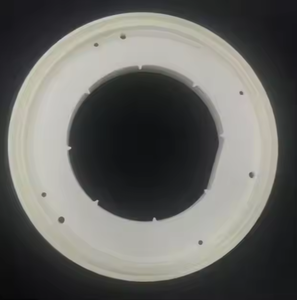
( Alumina Ceramic Wear Liners)
Its reduced thermal development coefficient (~ 8 × 10 ⁻⁶/ K) adds to dimensional security during thermal biking, decreasing the danger of cracking as a result of thermal shock when properly installed.
Furthermore, alumina is electrically protecting and chemically inert to a lot of acids, alkalis, and solvents, making it ideal for destructive atmospheres where metal linings would certainly weaken quickly.
These mixed properties make alumina porcelains excellent for safeguarding important facilities in mining, power generation, concrete manufacturing, and chemical handling sectors.
2. Manufacturing Processes and Layout Combination Techniques
2.1 Shaping, Sintering, and Quality Assurance Protocols
The production of alumina ceramic wear linings involves a sequence of accuracy manufacturing actions designed to accomplish high thickness, marginal porosity, and regular mechanical performance.
Raw alumina powders are processed with milling, granulation, and creating methods such as completely dry pressing, isostatic pressing, or extrusion, depending on the desired geometry– ceramic tiles, plates, pipelines, or custom-shaped segments.
Eco-friendly bodies are then sintered at temperature levels between 1500 ° C and 1700 ° C in air, promoting densification with solid-state diffusion and achieving relative densities surpassing 95%, typically coming close to 99% of theoretical thickness.
Complete densification is essential, as recurring porosity acts as tension concentrators and accelerates wear and fracture under service conditions.
Post-sintering operations might consist of diamond grinding or lapping to achieve tight dimensional resistances and smooth surface coatings that lessen rubbing and fragment capturing.
Each batch undertakes extensive quality assurance, consisting of X-ray diffraction (XRD) for phase evaluation, scanning electron microscopy (SEM) for microstructural analysis, and solidity and bend screening to confirm compliance with worldwide requirements such as ISO 6474 or ASTM B407.
2.2 Placing Techniques and System Compatibility Factors To Consider
Reliable combination of alumina wear liners right into industrial tools requires careful attention to mechanical attachment and thermal expansion compatibility.
Usual installation methods consist of glue bonding using high-strength ceramic epoxies, mechanical attaching with studs or supports, and embedding within castable refractory matrices.
Glue bonding is commonly made use of for flat or gently curved surface areas, offering uniform tension distribution and vibration damping, while stud-mounted systems allow for easy substitute and are favored in high-impact areas.
To suit differential thermal development between alumina and metal substratums (e.g., carbon steel), engineered spaces, flexible adhesives, or certified underlayers are included to prevent delamination or cracking throughout thermal transients.
Developers need to likewise consider edge security, as ceramic tiles are prone to damaging at exposed edges; services consist of beveled edges, metal shadows, or overlapping floor tile setups.
Proper installment ensures long service life and maximizes the safety function of the lining system.
3. Use Devices and Performance Analysis in Service Environments
3.1 Resistance to Abrasive, Erosive, and Effect Loading
Alumina ceramic wear linings excel in atmospheres dominated by 3 primary wear mechanisms: two-body abrasion, three-body abrasion, and bit erosion.
In two-body abrasion, hard particles or surface areas directly gouge the liner surface, a typical event in chutes, receptacles, and conveyor transitions.
Three-body abrasion involves loosened bits entraped between the lining and relocating material, bring about rolling and scratching action that progressively gets rid of product.
Erosive wear happens when high-velocity particles impinge on the surface area, especially in pneumatically-driven conveying lines and cyclone separators.
As a result of its high firmness and reduced crack strength, alumina is most reliable in low-impact, high-abrasion circumstances.
It carries out exceptionally well versus siliceous ores, coal, fly ash, and cement clinker, where wear rates can be lowered by 10– 50 times contrasted to light steel linings.
However, in applications involving repeated high-energy influence, such as main crusher chambers, crossbreed systems incorporating alumina ceramic tiles with elastomeric supports or metal guards are usually utilized to soak up shock and protect against crack.
3.2 Field Screening, Life Cycle Evaluation, and Failing Mode Analysis
Efficiency evaluation of alumina wear liners involves both research laboratory testing and area monitoring.
Standardized examinations such as the ASTM G65 completely dry sand rubber wheel abrasion examination offer comparative wear indices, while customized slurry disintegration rigs mimic site-specific conditions.
In industrial settings, use price is commonly measured in mm/year or g/kWh, with life span estimates based on first density and observed deterioration.
Failing modes consist of surface area polishing, micro-cracking, spalling at sides, and complete ceramic tile dislodgement as a result of sticky deterioration or mechanical overload.
Source analysis usually exposes setup errors, inappropriate quality choice, or unforeseen influence tons as main factors to early failure.
Life cycle expense analysis consistently shows that in spite of greater initial expenses, alumina liners provide remarkable overall cost of possession as a result of extensive substitute intervals, decreased downtime, and lower maintenance labor.
4. Industrial Applications and Future Technological Advancements
4.1 Sector-Specific Executions Throughout Heavy Industries
Alumina ceramic wear liners are deployed throughout a broad spectrum of industrial fields where product degradation presents functional and economic difficulties.
In mining and mineral processing, they secure transfer chutes, mill liners, hydrocyclones, and slurry pumps from rough slurries consisting of quartz, hematite, and other difficult minerals.
In nuclear power plant, alumina ceramic tiles line coal pulverizer ducts, central heating boiler ash receptacles, and electrostatic precipitator parts subjected to fly ash erosion.
Concrete manufacturers make use of alumina liners in raw mills, kiln inlet zones, and clinker conveyors to fight the highly unpleasant nature of cementitious products.
The steel industry utilizes them in blast heating system feed systems and ladle shadows, where resistance to both abrasion and modest thermal loads is crucial.
Also in much less traditional applications such as waste-to-energy plants and biomass handling systems, alumina ceramics supply resilient protection against chemically aggressive and fibrous products.
4.2 Arising Patterns: Compound Equipments, Smart Liners, and Sustainability
Present study concentrates on boosting the sturdiness and functionality of alumina wear systems through composite design.
Alumina-zirconia (Al ₂ O FOUR-ZrO ₂) compounds leverage change strengthening from zirconia to improve crack resistance, while alumina-titanium carbide (Al two O TWO-TiC) grades use boosted efficiency in high-temperature gliding wear.
An additional advancement involves embedding sensing units within or underneath ceramic liners to keep an eye on wear development, temperature, and impact frequency– making it possible for predictive upkeep and electronic double assimilation.
From a sustainability viewpoint, the extensive service life of alumina liners reduces product intake and waste generation, aligning with circular economy concepts in commercial procedures.
Recycling of invested ceramic liners right into refractory aggregates or building and construction products is also being explored to decrease ecological footprint.
To conclude, alumina ceramic wear liners stand for a cornerstone of modern-day commercial wear security modern technology.
Their phenomenal solidity, thermal security, and chemical inertness, combined with fully grown manufacturing and installment practices, make them crucial in combating material degradation throughout hefty markets.
As material science advancements and electronic monitoring ends up being extra integrated, the next generation of smart, resistant alumina-based systems will better improve functional effectiveness and sustainability in rough settings.
Supplier
Alumina Technology Co., Ltd focus on the research and development, production and sales of aluminum oxide powder, aluminum oxide products, aluminum oxide crucible, etc., serving the electronics, ceramics, chemical and other industries. Since its establishment in 2005, the company has been committed to providing customers with the best products and services. If you are looking for high quality nabaltec alumina, please feel free to contact us. (nanotrun@yahoo.com)
Tags: Alumina Ceramic Wear Liners, Alumina Ceramics, alumina
All articles and pictures are from the Internet. If there are any copyright issues, please contact us in time to delete.
Inquiry us