1. Essential Chemistry and Crystallographic Style of Taxi SIX
1.1 Boron-Rich Framework and Electronic Band Framework
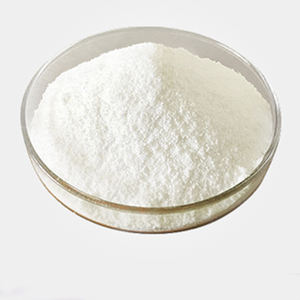
(Calcium Hexaboride)
Calcium hexaboride (TAXICAB ₆) is a stoichiometric metal boride belonging to the course of rare-earth and alkaline-earth hexaborides, identified by its distinct combination of ionic, covalent, and metal bonding features.
Its crystal structure takes on the cubic CsCl-type latticework (area group Pm-3m), where calcium atoms inhabit the dice edges and a complex three-dimensional framework of boron octahedra (B ₆ devices) stays at the body center.
Each boron octahedron is composed of six boron atoms covalently bound in a very symmetrical plan, forming a rigid, electron-deficient network supported by cost transfer from the electropositive calcium atom.
This cost transfer leads to a partially loaded conduction band, endowing CaB ₆ with abnormally high electric conductivity for a ceramic product– on the order of 10 five S/m at room temperature level– despite its huge bandgap of about 1.0– 1.3 eV as identified by optical absorption and photoemission researches.
The origin of this paradox– high conductivity coexisting with a large bandgap– has actually been the subject of extensive study, with concepts suggesting the presence of innate problem states, surface conductivity, or polaronic transmission mechanisms entailing localized electron-phonon coupling.
Current first-principles calculations sustain a version in which the transmission band minimum obtains mainly from Ca 5d orbitals, while the valence band is controlled by B 2p states, producing a slim, dispersive band that facilitates electron wheelchair.
1.2 Thermal and Mechanical Security in Extreme Conditions
As a refractory ceramic, TAXICAB ₆ shows exceptional thermal stability, with a melting factor exceeding 2200 ° C and minimal weight reduction in inert or vacuum cleaner atmospheres as much as 1800 ° C.
Its high decomposition temperature level and low vapor pressure make it suitable for high-temperature architectural and useful applications where product stability under thermal stress is vital.
Mechanically, CaB six has a Vickers solidity of roughly 25– 30 GPa, putting it among the hardest well-known borides and mirroring the toughness of the B– B covalent bonds within the octahedral structure.
The material additionally shows a low coefficient of thermal growth (~ 6.5 × 10 ⁻⁶/ K), adding to exceptional thermal shock resistance– a crucial quality for parts subjected to fast home heating and cooling cycles.
These homes, combined with chemical inertness toward liquified metals and slags, underpin its use in crucibles, thermocouple sheaths, and high-temperature sensors in metallurgical and commercial processing settings.
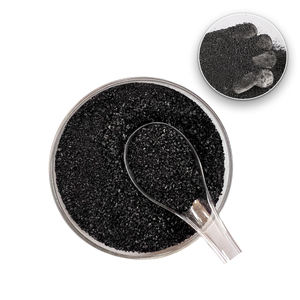
( Calcium Hexaboride)
Furthermore, TAXICAB ₆ reveals remarkable resistance to oxidation below 1000 ° C; however, over this limit, surface oxidation to calcium borate and boric oxide can happen, demanding protective finishings or operational controls in oxidizing ambiences.
2. Synthesis Paths and Microstructural Engineering
2.1 Standard and Advanced Fabrication Techniques
The synthesis of high-purity CaB ₆ generally includes solid-state responses between calcium and boron forerunners at raised temperatures.
Typical methods consist of the decrease of calcium oxide (CaO) with boron carbide (B ₄ C) or essential boron under inert or vacuum cleaner problems at temperatures in between 1200 ° C and 1600 ° C. ^
. The reaction needs to be meticulously controlled to prevent the formation of secondary stages such as CaB ₄ or taxi TWO, which can break down electric and mechanical efficiency.
Alternate approaches consist of carbothermal reduction, arc-melting, and mechanochemical synthesis through high-energy ball milling, which can minimize response temperature levels and enhance powder homogeneity.
For thick ceramic components, sintering methods such as hot pressing (HP) or trigger plasma sintering (SPS) are employed to attain near-theoretical thickness while decreasing grain growth and maintaining fine microstructures.
SPS, particularly, enables rapid combination at lower temperature levels and much shorter dwell times, lowering the risk of calcium volatilization and keeping stoichiometry.
2.2 Doping and Flaw Chemistry for Residential Property Adjusting
One of the most significant developments in taxi six study has actually been the capability to tailor its digital and thermoelectric residential properties via deliberate doping and defect design.
Substitution of calcium with lanthanum (La), cerium (Ce), or other rare-earth aspects presents additional charge providers, considerably enhancing electric conductivity and enabling n-type thermoelectric behavior.
In a similar way, partial substitute of boron with carbon or nitrogen can change the density of states near the Fermi degree, enhancing the Seebeck coefficient and total thermoelectric figure of value (ZT).
Intrinsic problems, especially calcium jobs, likewise play an essential role in determining conductivity.
Researches show that CaB six usually shows calcium deficiency due to volatilization throughout high-temperature handling, leading to hole conduction and p-type actions in some examples.
Managing stoichiometry through precise environment control and encapsulation during synthesis is consequently crucial for reproducible performance in electronic and power conversion applications.
3. Functional Residences and Physical Phenomena in CaB ₆
3.1 Exceptional Electron Discharge and Field Exhaust Applications
CaB six is renowned for its reduced job function– around 2.5 eV– amongst the lowest for secure ceramic products– making it a superb candidate for thermionic and area electron emitters.
This property arises from the combination of high electron focus and beneficial surface dipole configuration, allowing efficient electron emission at fairly reduced temperature levels compared to standard materials like tungsten (job feature ~ 4.5 eV).
Consequently, TAXICAB ₆-based cathodes are used in electron light beam instruments, consisting of scanning electron microscopic lens (SEM), electron beam of light welders, and microwave tubes, where they supply longer lifetimes, lower operating temperatures, and higher illumination than standard emitters.
Nanostructured taxi ₆ films and hairs even more boost area exhaust efficiency by increasing regional electrical field toughness at sharp suggestions, making it possible for cold cathode operation in vacuum cleaner microelectronics and flat-panel screens.
3.2 Neutron Absorption and Radiation Protecting Capabilities
One more crucial performance of taxicab six lies in its neutron absorption capability, largely due to the high thermal neutron capture cross-section of the ¹⁰ B isotope (3837 barns).
Natural boron has about 20% ¹⁰ B, and enriched taxicab six with greater ¹⁰ B web content can be tailored for enhanced neutron shielding performance.
When a neutron is captured by a ¹⁰ B nucleus, it sets off the nuclear response ¹⁰ B(n, α)⁷ Li, launching alpha bits and lithium ions that are easily stopped within the material, converting neutron radiation into harmless charged particles.
This makes taxicab six an eye-catching material for neutron-absorbing components in atomic power plants, spent gas storage space, and radiation discovery systems.
Unlike boron carbide (B FOUR C), which can swell under neutron irradiation because of helium build-up, CaB ₆ displays superior dimensional stability and resistance to radiation damage, especially at elevated temperatures.
Its high melting factor and chemical durability even more enhance its viability for lasting deployment in nuclear environments.
4. Emerging and Industrial Applications in Advanced Technologies
4.1 Thermoelectric Energy Conversion and Waste Warm Recovery
The combination of high electrical conductivity, modest Seebeck coefficient, and reduced thermal conductivity (because of phonon scattering by the facility boron framework) positions CaB ₆ as an encouraging thermoelectric material for tool- to high-temperature energy harvesting.
Drugged versions, specifically La-doped taxicab SIX, have actually demonstrated ZT values exceeding 0.5 at 1000 K, with potential for more renovation with nanostructuring and grain boundary engineering.
These products are being checked out for usage in thermoelectric generators (TEGs) that transform hazardous waste heat– from steel furnaces, exhaust systems, or nuclear power plant– into usable electrical power.
Their stability in air and resistance to oxidation at elevated temperature levels provide a substantial advantage over conventional thermoelectrics like PbTe or SiGe, which require protective ambiences.
4.2 Advanced Coatings, Composites, and Quantum Product Platforms
Beyond mass applications, TAXI six is being integrated right into composite materials and functional finishings to boost hardness, wear resistance, and electron emission characteristics.
For example, CaB ₆-enhanced light weight aluminum or copper matrix compounds display better toughness and thermal stability for aerospace and electric contact applications.
Slim films of CaB ₆ transferred via sputtering or pulsed laser deposition are used in difficult layers, diffusion obstacles, and emissive layers in vacuum electronic devices.
Extra lately, single crystals and epitaxial movies of CaB six have drawn in interest in condensed issue physics as a result of reports of unexpected magnetic behavior, including insurance claims of room-temperature ferromagnetism in drugged samples– though this continues to be controversial and likely connected to defect-induced magnetism rather than innate long-range order.
No matter, TAXI ₆ functions as a version system for researching electron relationship effects, topological electronic states, and quantum transport in complex boride lattices.
In recap, calcium hexaboride exemplifies the convergence of structural effectiveness and functional adaptability in sophisticated porcelains.
Its distinct combination of high electric conductivity, thermal security, neutron absorption, and electron discharge homes makes it possible for applications throughout energy, nuclear, digital, and materials scientific research domain names.
As synthesis and doping methods continue to advance, TAXI ₆ is positioned to play an increasingly important duty in next-generation innovations needing multifunctional efficiency under extreme problems.
5. Distributor
TRUNNANO is a supplier of Spherical Tungsten Powder with over 12 years of experience in nano-building energy conservation and nanotechnology development. It accepts payment via Credit Card, T/T, West Union and Paypal. Trunnano will ship the goods to customers overseas through FedEx, DHL, by air, or by sea. If you want to know more about Spherical Tungsten Powder, please feel free to contact us and send an inquiry(sales5@nanotrun.com).
Tags: calcium hexaboride, calcium boride, CaB6 Powder
All articles and pictures are from the Internet. If there are any copyright issues, please contact us in time to delete.
Inquiry us