1. Basic Make-up and Architectural Qualities of Quartz Ceramics
1.1 Chemical Purity and Crystalline-to-Amorphous Shift
(Quartz Ceramics)
Quartz ceramics, likewise known as fused silica or integrated quartz, are a course of high-performance inorganic materials stemmed from silicon dioxide (SiO ₂) in its ultra-pure, non-crystalline (amorphous) kind.
Unlike conventional ceramics that rely on polycrystalline frameworks, quartz porcelains are identified by their full absence of grain boundaries as a result of their lustrous, isotropic network of SiO ₄ tetrahedra interconnected in a three-dimensional random network.
This amorphous structure is attained with high-temperature melting of all-natural quartz crystals or artificial silica precursors, followed by rapid air conditioning to avoid condensation.
The resulting product contains usually over 99.9% SiO TWO, with trace contaminations such as alkali steels (Na ⁺, K ⁺), aluminum, and iron maintained parts-per-million levels to protect optical quality, electric resistivity, and thermal performance.
The lack of long-range order removes anisotropic habits, making quartz ceramics dimensionally steady and mechanically uniform in all directions– a crucial advantage in precision applications.
1.2 Thermal Habits and Resistance to Thermal Shock
One of the most defining features of quartz porcelains is their incredibly low coefficient of thermal growth (CTE), commonly around 0.55 × 10 ⁻⁶/ K in between 20 ° C and 300 ° C.
This near-zero development arises from the flexible Si– O– Si bond angles in the amorphous network, which can readjust under thermal stress without breaking, permitting the product to endure quick temperature level modifications that would certainly crack traditional porcelains or metals.
Quartz ceramics can sustain thermal shocks surpassing 1000 ° C, such as straight immersion in water after heating up to red-hot temperature levels, without splitting or spalling.
This home makes them crucial in environments entailing duplicated home heating and cooling cycles, such as semiconductor processing heating systems, aerospace elements, and high-intensity lights systems.
Additionally, quartz ceramics preserve architectural honesty as much as temperature levels of about 1100 ° C in constant service, with short-term exposure resistance coming close to 1600 ° C in inert atmospheres.
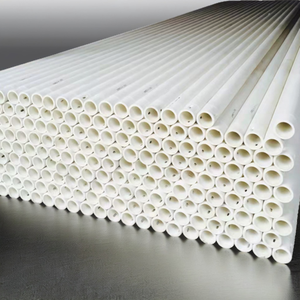
( Quartz Ceramics)
Beyond thermal shock resistance, they exhibit high softening temperature levels (~ 1600 ° C )and outstanding resistance to devitrification– though prolonged direct exposure above 1200 ° C can start surface crystallization right into cristobalite, which might endanger mechanical stamina as a result of quantity modifications throughout phase changes.
2. Optical, Electric, and Chemical Features of Fused Silica Systems
2.1 Broadband Transparency and Photonic Applications
Quartz porcelains are renowned for their remarkable optical transmission throughout a vast spectral array, expanding from the deep ultraviolet (UV) at ~ 180 nm to the near-infrared (IR) at ~ 2500 nm.
This transparency is made it possible for by the lack of contaminations and the homogeneity of the amorphous network, which lessens light scattering and absorption.
High-purity artificial merged silica, generated via flame hydrolysis of silicon chlorides, attains even better UV transmission and is used in crucial applications such as excimer laser optics, photolithography lenses, and space-based telescopes.
The material’s high laser damages limit– resisting breakdown under extreme pulsed laser irradiation– makes it perfect for high-energy laser systems used in fusion research and commercial machining.
Moreover, its low autofluorescence and radiation resistance ensure integrity in scientific instrumentation, consisting of spectrometers, UV curing systems, and nuclear surveillance devices.
2.2 Dielectric Performance and Chemical Inertness
From an electrical standpoint, quartz ceramics are superior insulators with quantity resistivity going beyond 10 ¹⁸ Ω · centimeters at area temperature level and a dielectric constant of approximately 3.8 at 1 MHz.
Their reduced dielectric loss tangent (tan δ < 0.0001) guarantees minimal energy dissipation in high-frequency and high-voltage applications, making them suitable for microwave home windows, radar domes, and shielding substratums in electronic settings up.
These buildings stay secure over a wide temperature level variety, unlike many polymers or conventional ceramics that weaken electrically under thermal stress and anxiety.
Chemically, quartz ceramics show exceptional inertness to most acids, including hydrochloric, nitric, and sulfuric acids, because of the security of the Si– O bond.
However, they are at risk to assault by hydrofluoric acid (HF) and strong antacids such as hot sodium hydroxide, which damage the Si– O– Si network.
This selective reactivity is manipulated in microfabrication processes where controlled etching of merged silica is required.
In hostile commercial atmospheres– such as chemical handling, semiconductor damp benches, and high-purity fluid handling– quartz ceramics function as linings, sight glasses, and activator components where contamination have to be lessened.
3. Manufacturing Processes and Geometric Engineering of Quartz Ceramic Elements
3.1 Melting and Forming Strategies
The production of quartz porcelains involves several specialized melting approaches, each customized to specific purity and application needs.
Electric arc melting utilizes high-purity quartz sand thawed in a water-cooled copper crucible under vacuum or inert gas, producing large boules or tubes with excellent thermal and mechanical homes.
Flame fusion, or burning synthesis, includes melting silicon tetrachloride (SiCl four) in a hydrogen-oxygen flame, transferring fine silica bits that sinter right into a transparent preform– this technique generates the highest possible optical quality and is utilized for synthetic fused silica.
Plasma melting provides an alternative course, offering ultra-high temperatures and contamination-free processing for niche aerospace and protection applications.
As soon as thawed, quartz porcelains can be formed with accuracy spreading, centrifugal creating (for tubes), or CNC machining of pre-sintered spaces.
Due to their brittleness, machining requires ruby devices and cautious control to stay clear of microcracking.
3.2 Accuracy Manufacture and Surface Area Finishing
Quartz ceramic components are often fabricated into intricate geometries such as crucibles, tubes, rods, windows, and custom-made insulators for semiconductor, solar, and laser sectors.
Dimensional accuracy is vital, specifically in semiconductor production where quartz susceptors and bell jars need to preserve exact placement and thermal harmony.
Surface finishing plays an essential duty in performance; refined surfaces lower light scattering in optical elements and minimize nucleation websites for devitrification in high-temperature applications.
Etching with buffered HF services can produce controlled surface textures or eliminate damaged layers after machining.
For ultra-high vacuum (UHV) systems, quartz ceramics are cleaned and baked to get rid of surface-adsorbed gases, making certain minimal outgassing and compatibility with sensitive procedures like molecular beam of light epitaxy (MBE).
4. Industrial and Scientific Applications of Quartz Ceramics
4.1 Role in Semiconductor and Photovoltaic Production
Quartz ceramics are foundational materials in the fabrication of incorporated circuits and solar batteries, where they act as heater tubes, wafer watercrafts (susceptors), and diffusion chambers.
Their ability to endure heats in oxidizing, minimizing, or inert atmospheres– incorporated with low metallic contamination– ensures procedure pureness and return.
During chemical vapor deposition (CVD) or thermal oxidation, quartz components preserve dimensional stability and stand up to bending, protecting against wafer breakage and misalignment.
In solar manufacturing, quartz crucibles are used to grow monocrystalline silicon ingots via the Czochralski process, where their purity straight influences the electrical quality of the last solar batteries.
4.2 Use in Illumination, Aerospace, and Analytical Instrumentation
In high-intensity discharge (HID) lamps and UV sanitation systems, quartz ceramic envelopes include plasma arcs at temperatures surpassing 1000 ° C while transmitting UV and noticeable light efficiently.
Their thermal shock resistance stops failing during fast light ignition and shutdown cycles.
In aerospace, quartz porcelains are made use of in radar windows, sensor real estates, and thermal protection systems because of their reduced dielectric continuous, high strength-to-density proportion, and security under aerothermal loading.
In logical chemistry and life scientific researches, integrated silica capillaries are important in gas chromatography (GC) and capillary electrophoresis (CE), where surface inertness prevents example adsorption and makes certain exact splitting up.
Additionally, quartz crystal microbalances (QCMs), which rely on the piezoelectric homes of crystalline quartz (unique from integrated silica), utilize quartz porcelains as safety housings and protecting supports in real-time mass sensing applications.
To conclude, quartz ceramics stand for an one-of-a-kind junction of severe thermal resilience, optical openness, and chemical pureness.
Their amorphous structure and high SiO two material allow performance in atmospheres where standard products fall short, from the heart of semiconductor fabs to the edge of area.
As modern technology advancements toward higher temperatures, better precision, and cleaner procedures, quartz porcelains will remain to serve as an important enabler of development throughout science and industry.
Supplier
Advanced Ceramics founded on October 17, 2012, is a high-tech enterprise committed to the research and development, production, processing, sales and technical services of ceramic relative materials and products. Our products includes but not limited to Boron Carbide Ceramic Products, Boron Nitride Ceramic Products, Silicon Carbide Ceramic Products, Silicon Nitride Ceramic Products, Zirconium Dioxide Ceramic Products, etc. If you are interested, please feel free to contact us.(nanotrun@yahoo.com)
Tags: Quartz Ceramics, ceramic dish, ceramic piping
All articles and pictures are from the Internet. If there are any copyright issues, please contact us in time to delete.
Inquiry us