č

China Mandates Mechanical Door Handles, Phasing Out Hidden Designs

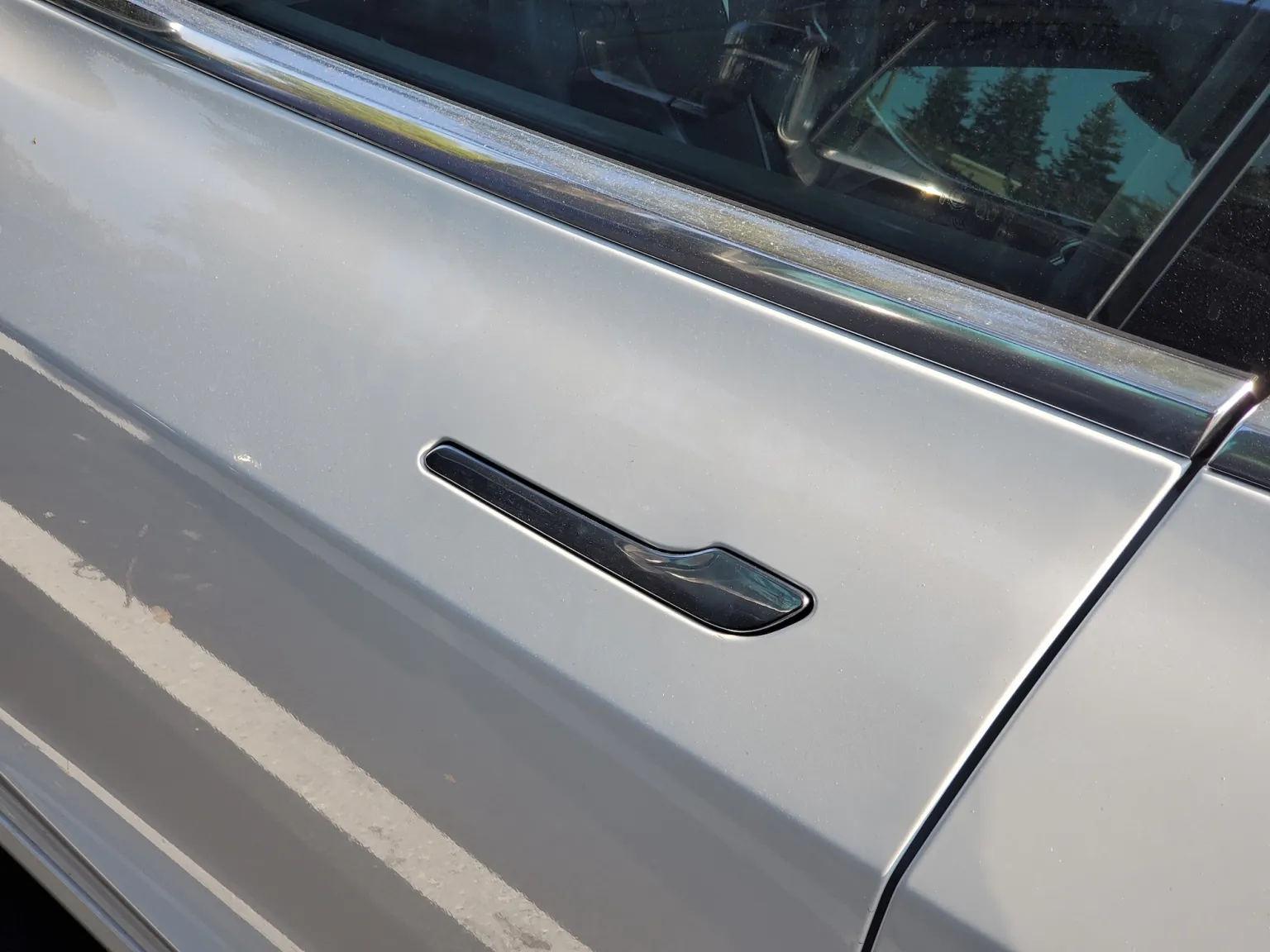
China’s Ministry of Industry and Information Technology has announced new regulations requiring all vehicles sold in China (excluding tailgates) to be equipped with mechanical door release mechanisms, both inside and outside the car, effective January 1, 2027. This move effectively bans the hidden, electronically operated door handles popularized by Tesla.


(tesla door Getty)

The regulation comes in direct response to multiple incidents where occupants were trapped in electric vehicles due to electronic door lock failures. A Bloomberg investigation last year revealed that Tesla’s door handles could malfunction after collisions due to power supply issues, prompting U.S. regulators to launch a related probe. China is the first country globally to implement such a mandatory requirement.

The standard-setting process began in May 2025, incorporating input from over 40 Chinese and international automakers, including BYD, Geely, SAIC, Xiaomi, General Motors, and Toyota. Notably, Tesla did not appear on the list of official drafting participants. This regulation is expected to prompt the global EV industry to reevaluate the balance between electronic design and safety redundancy.

Roger Luo said:This regulation reinforces fundamental safety redundancy in automotive design. As the world’s largest EV market, China’s move may influence global automakers’ standards, pushing the industry to enhance fail-safe mechanisms for electronic systems.

All articles and pictures are from the Internet. If there are any copyright issues, please contact us in time to delete.

Inquiry us


    Leave a Reply

    Chemicals&Materials

    Biosurfactants: Nature’s Sustainable Answer to Modern Surface Chemistry anionic surfactants and bleach

    1. Molecular Style and Biological Origins 1.1 Architectural Diversity and Amphiphilic Style (Biosurfactants) Biosurfactants are a heterogeneous team of surface-active particles created by microorganisms, including germs, yeasts, and fungi, defined by their distinct amphiphilic framework consisting of both hydrophilic and hydrophobic domain names. Unlike artificial surfactants derived from petrochemicals, biosurfactants show impressive architectural diversity, ranging […]

    Read More
    Chemicals&Materials

    Tesla sues California Department of Motor Vehicles

    Tesla recently filed a lawsuit against the California Department of Motor Vehicles, seeking to overturn a previous ruling by the agency. The DMV had determined that Tesla’s advertising regarding the autonomous driving capabilities of its vehicles was misleading and potentially violated California state law. (tesla california getty) The lawsuit has drawn renewed attention to a […]

    Read More
    Chemicals&Materials

    Trump’s Quiet Undoing of EPA Climate Authority

    The Trump administration today formally repealed the EPA’s 2009 “endangerment finding,” which had declared greenhouse gases a threat to public health and welfare—serving as the legal foundation for the EPA to regulate carbon emissions under the Clean Air Act. (GettyImages) For now, the rule change applies only to tailpipe emissions from cars and trucks, but […]

    Read More